Completed 56,000 Product Relabeling Tasks in 3 Days: A Real 3PL Warehouse Operation Case Study
- July 29, 2026
- 9 min read
- Dragon3PL Team
How Preparation, On-site Management, and Quality Control Helped Complete a Large-Scale Relabeling Project
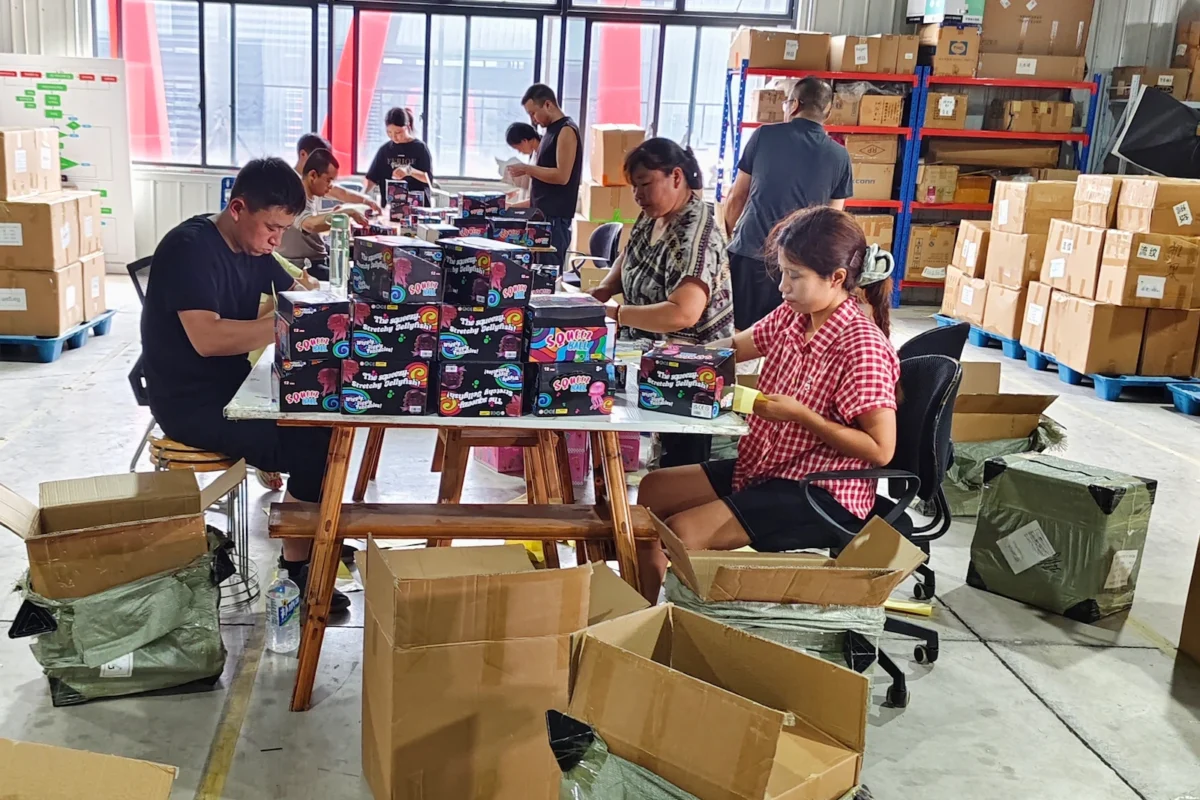
In 3PL warehousing, daily operations usually include receiving, storage, inventory management, and order fulfillment. However, customers may also require special warehouse operations within a short timeframe.
Examples include:
- Product relabeling;
- Packaging information updates;
- Product sorting and repacking;
- Large-volume inventory adjustments.
Although product labeling may seem like a simple task, handling tens of thousands of units across multiple SKUs requires much more than simply adding more workers.
The warehouse needs to solve several challenges at the same time:
- How to avoid product mix-ups between different SKUs;
- How to match labels with the correct products quickly;
- How to help the operation team start efficiently;
- How to maintain speed while controlling error rates;
- How to complete the project according to required timelines, quantities, and quality standards.
Recently, Dragon3PL completed a real product relabeling project.
The project involved:
- 56,000 product units
- 44 SKUs
- Completed within 3 days
- 15 operators on the first day, adjusted to 10 operators on the following two days
Through detailed preparation, on-site management, and quality control procedures, the project was completed according to plan.
Project Overview
| Project | Details |
|---|---|
| Project Type | Product Relabeling |
| Completion Time | 3 days |
| Total Quantity | 56,000 units |
| SKU Volume | 44 SKUs |
| Staffing | 15 operators on Day 1, 10 operators on Days 2-3 |
| Project Characteristics | Large volume, multiple SKUs, short operation timeline |
| Quality Control | Process inspection + final sampling inspection |
Phase 1: Preparation Determines Operational Efficiency
For large-scale warehouse relabeling projects, preparation before starting the operation directly impacts the overall efficiency.
Without proper planning, common problems may occur:
- Longer time spent searching for labels;
- Products being mixed together;
- Operators waiting for materials;
- Higher risk of incorrect labeling.
Therefore, sufficient preparation was completed before the project started.
1. Pre-sorting Labels to Prevent Confusion
This project involved 44 SKUs.
If labels for different products are mixed together, operators need additional time to identify and confirm each label, increasing the risk of:
- Lower productivity;
- Incorrect label usage;
- Product-label mismatches.
Before operation started, all labels were sorted and organized according to SKU.
For example:
- SKU A labels were prepared separately;
- SKU B labels were prepared separately;
- SKU C labels were prepared separately.
Each SKU had its designated label area.
This allowed operators to quickly access the correct labels during the process and reduced potential errors.
For multi-SKU warehouse operations, effective label management is the first step toward accuracy.
2. Product Classification Before Operation
Besides preparing labels, the products themselves also needed to be organized in advance.
For example:
If one SKU contained 10 cartons of products, those cartons were grouped together and matched with the corresponding labels.
After preparation, the operation could follow a clear workflow:
Pick products → Apply labels → Complete process → Move to next batch
This reduced unnecessary searching and helped maintain a stable workflow.
Clear product classification is an important foundation for efficient warehouse operations.
3. Preparing Workstations Before Team Arrival
Before the operation team arrived, warehouse management prepared the working areas in advance.
Preparation included:
- Worktable setup;
- Operation area planning;
- Label arrangement;
- Tool preparation.
For example:
If 15 operators were scheduled for the first day, enough workstations needed to be prepared beforehand.
This allowed the team to start immediately instead of spending time waiting for setup.
For short-term warehouse projects, reducing idle time directly improves productivity.
4. Pre-operation Training for Fast Execution
Because this project required quick organization of operation resources, a pre-operation briefing was conducted before starting.
The training included two key areas:
Safety Training
Including:
- Warehouse safety requirements;
- Restroom and break area locations;
- Safe movement routes;
- Operation area rules.
Operation Training
Including:
- Correct label placement;
- Standard labeling procedures;
- How to report issues;
- How to avoid labeling mistakes.
A consistent operating standard helped the team quickly adapt to the project requirements.
Phase 2: On-site Management Ensures Continuous Progress
After preparation was completed, on-site management became the key factor in maintaining project progress.
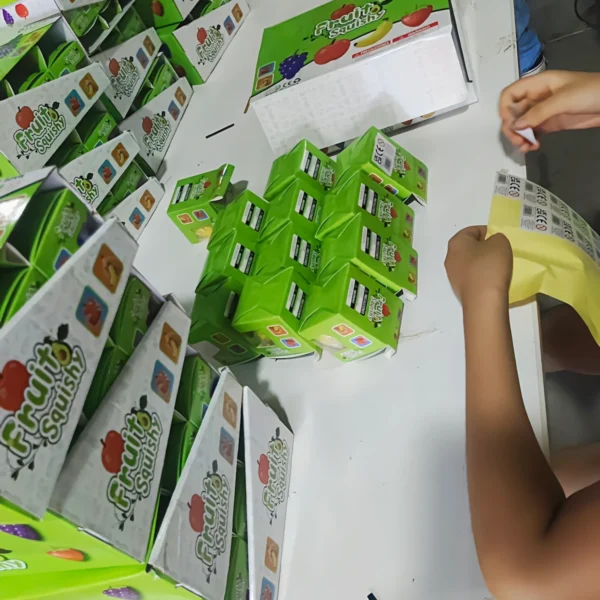
1. Assigning Roles Based on Individual Strengths
During the operation, not every team member performed the same tasks.
Different operators had different strengths:
Some were faster at:
- Applying labels;
Some were faster at:
- Repacking products;
Some were more detail-oriented at:
- Checking quality.
Therefore, task allocation was adjusted based on actual performance.
For example:
- Faster labeling operators focused on labeling;
- Operators with better packing speed handled repacking;
- Detail-oriented operators supported inspection.
By matching people with suitable tasks, the overall workflow remained continuous.
Warehouse efficiency is not only about adding more workers — it is also about optimizing people and processes.
2. Adjusting Staffing According to Project Progress
The staffing level was not the same throughout the three-day project.
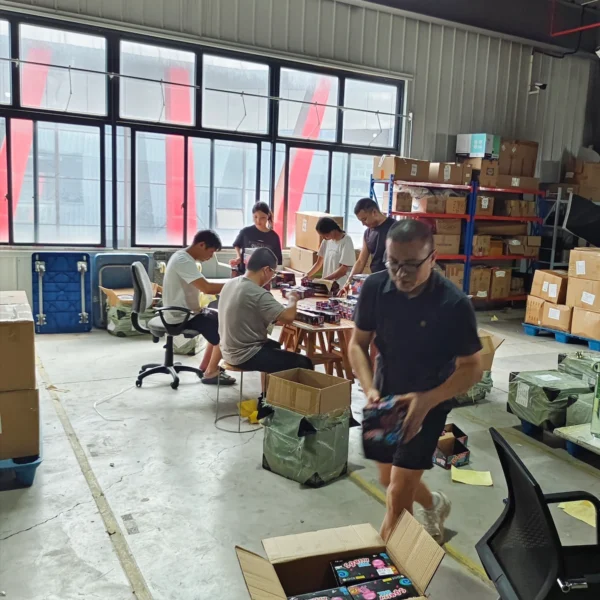
On the first day, 15 operators were assigned because the team needed to establish the workflow and handle the initial workload.
As the project entered a more stable stage, staffing was adjusted to 10 operators for the following two days based on the remaining workload.
This approach helped:
- Accelerate project startup;
- Avoid unnecessary labor allocation;
- Match resources with actual requirements.
In warehouse operations, staffing needs to remain flexible according to project progress.
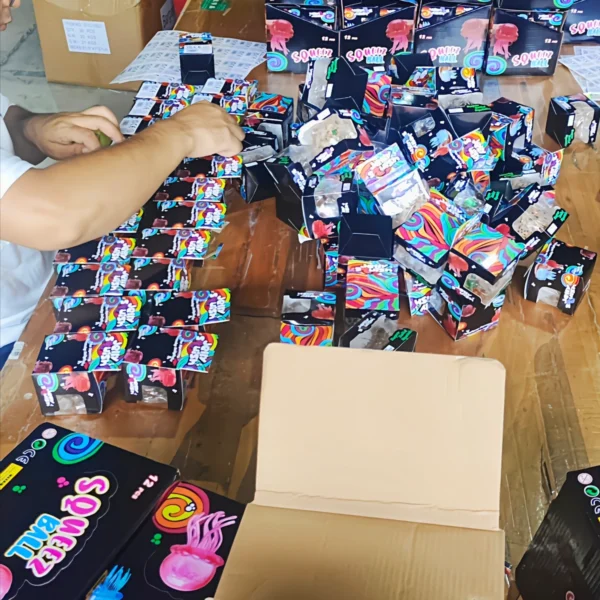
3. Preparing the Next Batch in Advance
During the operation, warehouse supervisors continuously monitored progress.
When one SKU was close to completion, the team prepared in advance:
- The next batch of products;
- The next batch of labels;
- The following operation tasks.
Waiting until the current batch was completely finished before preparing the next task could create unnecessary downtime.
Effective warehouse management requires:
Current task in progress, next task already prepared.
This helps reduce interruptions and maintain workflow continuity.
4. Managing Break Times to Maintain Productivity
In large-scale warehouse operations, workforce scheduling affects not only speed but also continuity.
If multiple operators leave their stations at the same time:
- Workflow may be interrupted;
- Waiting time increases;
- Overall productivity decreases.
Therefore, break schedules and temporary departures need to be managed properly to keep operations running smoothly.
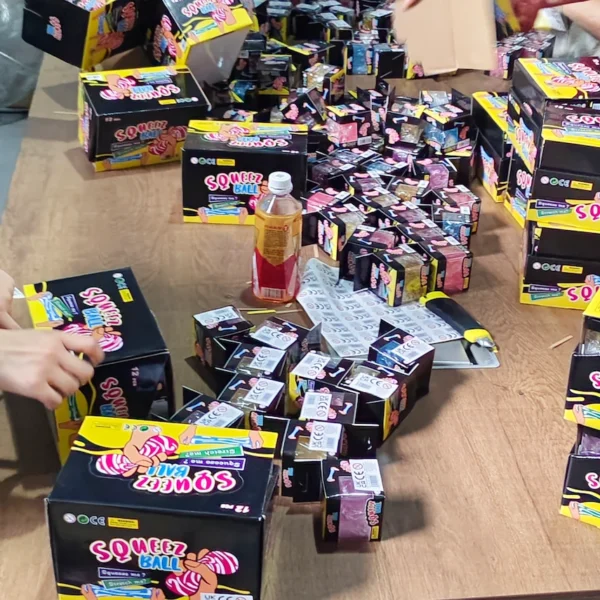
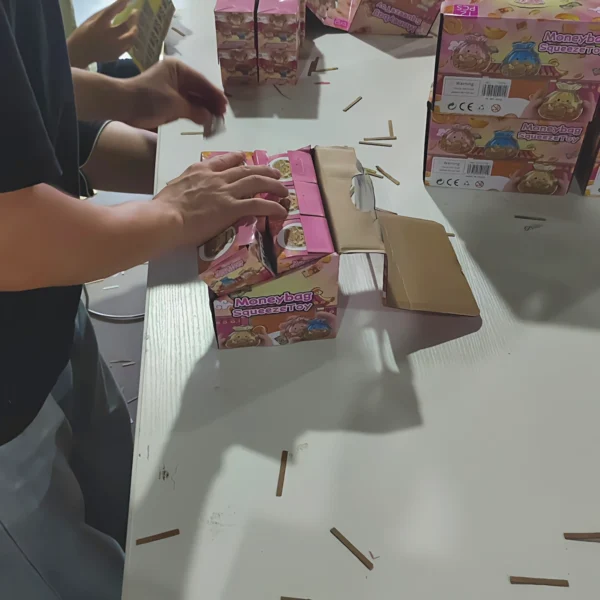
5. Continuous Process Inspection During Operation
Quality control should not only happen at the end.
During the labeling process, supervisors continuously checked:
- Whether labels were placed correctly;
- Whether the wrong SKU was labeled;
- Whether labels were reversed;
- Whether any products were missed.
Identifying problems early helps reduce rework later.
Phase 3: Final Quality Inspection and Delivery Confirmation
Completing the labeling process does not mean the warehouse operation is finished.
Final quality confirmation is still required.
1. Quantity Verification
The team first confirmed:
- All products had been processed;
- SKU quantities were accurate;
- Product locations were clearly identified.
For example:
If one SKU contained 10 cartons, the team confirmed that all 10 cartons had completed the labeling process and were properly recorded.
Warehouse fulfillment requires both speed and accuracy.
2. Sampling Inspection and Cross-checking
After completing the operation, quality inspections were performed.
Inspection methods included:
- Random sampling;
- Cross-check inspection.
The inspection covered:
- Whether outer labels were correct;
- Whether inner product labels matched;
- Whether label positions met requirements;
- Whether any errors or missing labels existed.
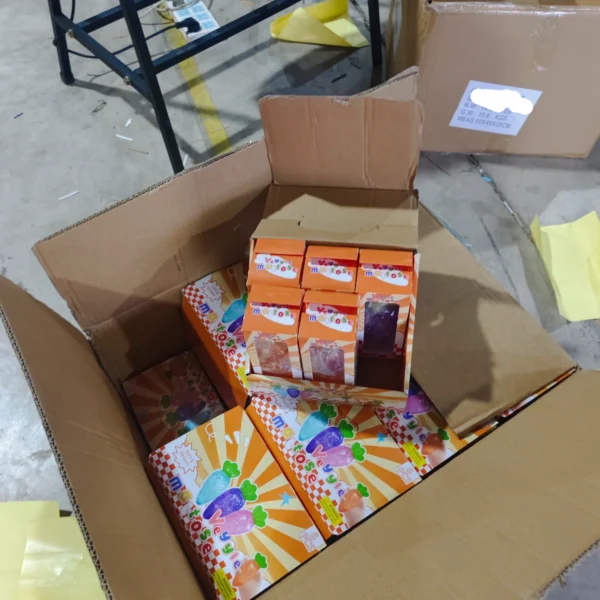
For example:
Several cartons were randomly opened to verify that internal product labels matched the external packaging information.
Through sampling inspection, the team could confirm that the completed batch met quality requirements.
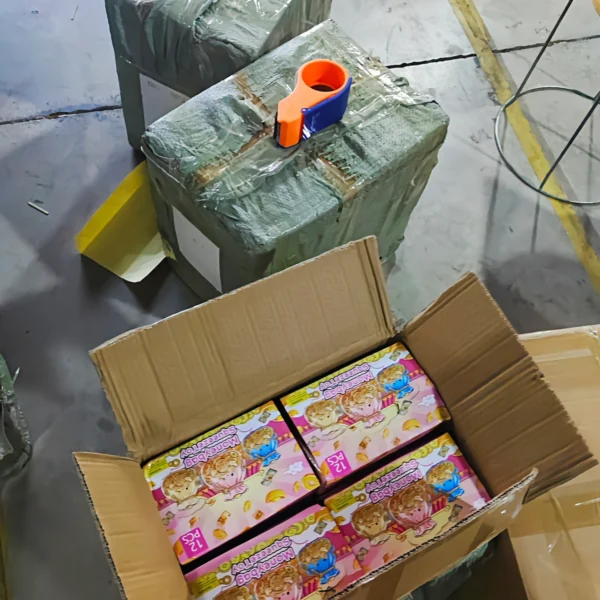
3. Repacking and Final Carton Sealing
After inspection was completed, products were repacked and sealed to ensure they were ready for the next warehouse or transportation process.
Final repacking ensured:
- Correct product quantity;
- Complete packaging condition;
- Clear handling information.
Project Results Summary
| Objective | Result |
|---|---|
| Completion Time | Completed within 3 days |
| Product Volume | 56,000 units |
| SKU Management | 44 SKUs processed separately |
| Workforce Management | Staffing adjusted according to project stage |
| Operation Method | Label classification, product organization, workflow coordination |
| Quality Control | Process inspection + final sampling inspection |
Conclusion: Successful Warehouse Projects Depend on Process Management, Not Only Labor
Completing 56,000 product relabeling tasks within 3 days may appear to be a repetitive warehouse activity, but the real challenge lies in the operational planning behind it.
From:
- Label preparation;
- Product classification;
- Workstation setup;
- Team training;
- Role assignment;
- Flexible staffing;
- Continuous inspection;
- Final quality verification;
every step affects the final delivery result.
For 3PL warehousing operations, handling urgent, large-volume, multi-SKU projects is not simply about adding more workers.
The key is building a clear and executable warehouse operation process through proper planning, coordination, and quality control.
This is also an important capability for professional 3PL warehouses when supporting special projects and customized customer requirements.
Recent Posts
Archives
Ready to Simplify Your China Logistics?
Whether you’re planning your first shipment or looking for a more reliable logistics partner, we’re here to help.
Tell us about your sourcing or shipping needs, and our team will get back to you with practical recommendations.
Dragon 3PL
Providing warehousing, cargo consolidation, FCL shipping and door-to-door delivery, and many value-added services and support for businesses shipping from China to overseas destinations.