What Happens During Product Inspection at a China Warehouse?
- October 10, 2026
- 9 min de lectura
- Equipo Dragon 3PL
A real inspection case involving two suppliers, three product types, and 64 cartons in our Yiwu warehouse.
What happens after suppliers deliver products to your warehouse?
If you source from multiple suppliers in China, cargo usually arrives according to each supplier’s own production and shipping schedule. But arrival at the warehouse does not mean the goods are ready to go into storage. Before products are officially put away, our warehouse team first completes receiving confirmation and product inspection.
Many problems are much easier to handle when they are found in Yiwu. If the same problem is discovered only after the cargo reaches the destination port, the cost and trouble are usually much higher.
This time, we recorded a real inspection case: two suppliers, 64 cartons, and three different product types.
The most important lesson from this case is simple:
The inspection checklist follows the product, not the routine.
Confirm the Delivery Information and Inspection Requirements
After the cargo arrives, our warehouse team first checks the delivery information, including the supplier, carton count, and the customer linked to the shipment.
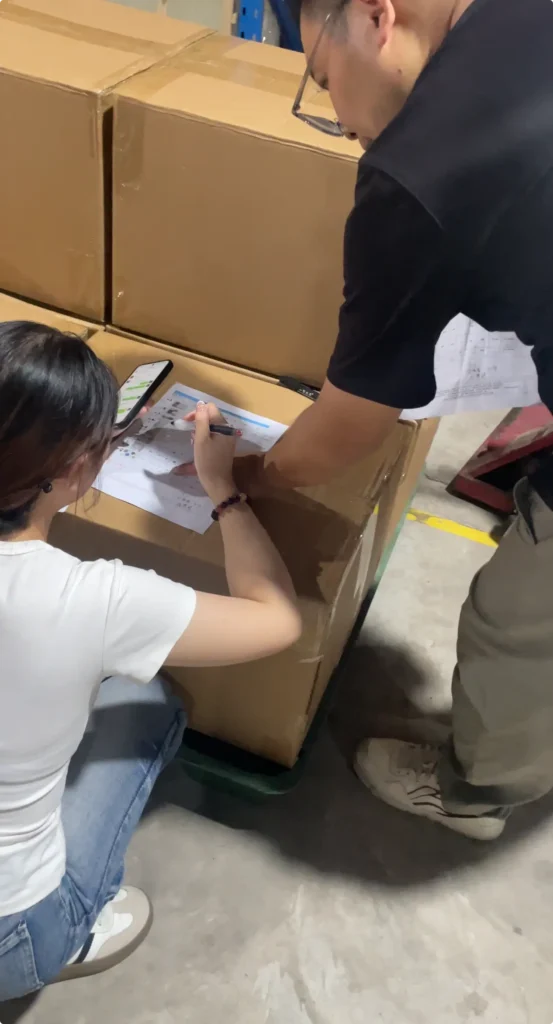
Then we confirm the inspection requirements.
If the customer has special instructions, we follow them. If there are no special instructions, we use our standard spot-check process.
Because different products carry different risks:
Functional products need to be checked for function.
Products with multiple colors or styles need extra attention to avoid mixed styles or mixed colors.
Products with stable weight may be checked more efficiently through weighing.
Moving-Ear Plush Hats — Function Test + Weighing Instead of Manual Counting
The first batch came from one hat supplier.
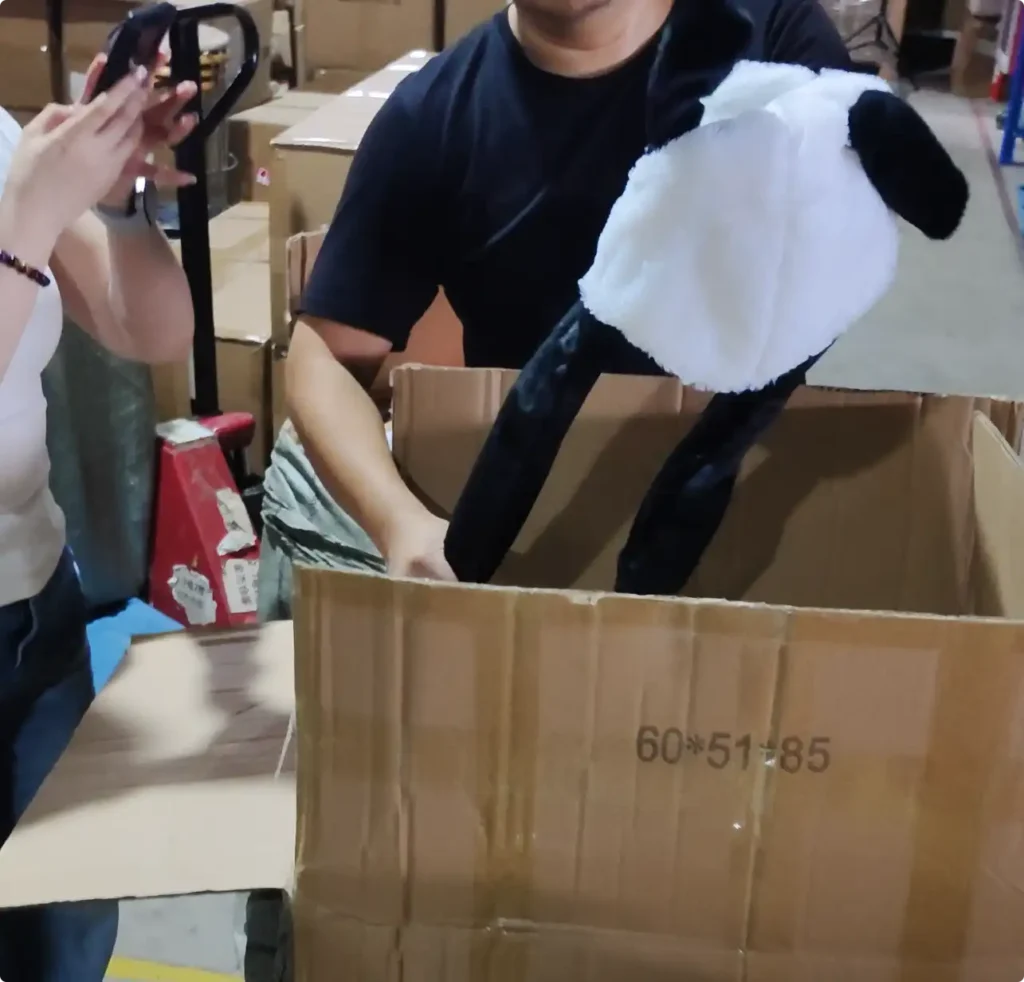
This supplier delivered 14 cartons and 2,650 hats in total, with a basic carton size of 60 × 51 × 85 cm. A few cartons were slightly smaller.
The first group was the functional moving-ear plush hats, with 6 cartons and 1,100 hats:
Bunny style, 3 colors: 2 cartons × 200 = 400 hats
Panda style: 1 carton × 200 = 200 hats
Monster style, 3 colors: 2 cartons × 150 = 300 hats
Cow and penguin styles combined: 1 carton × 200 = 200 hats
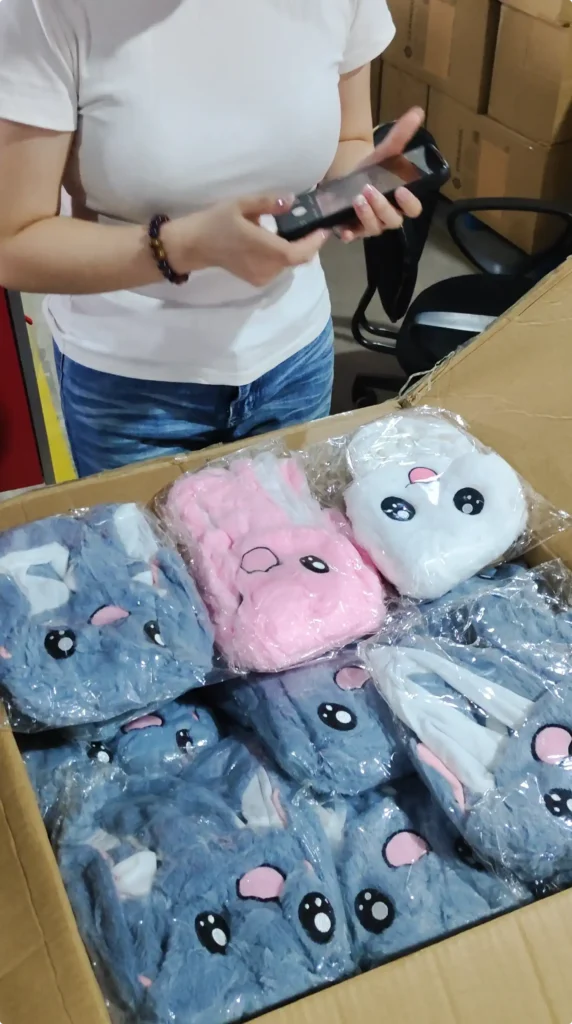
Check the product function
These hats are different from ordinary hats because they have a moving-ear function.
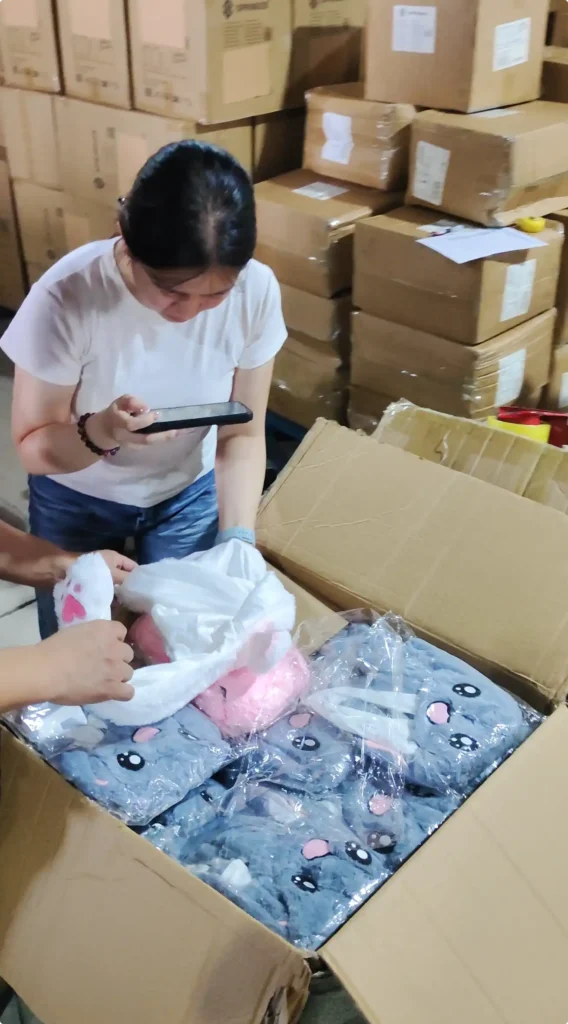
So during inspection, it is not enough to look only at the appearance. We also need to operate the air bladder and confirm that the ears move properly.
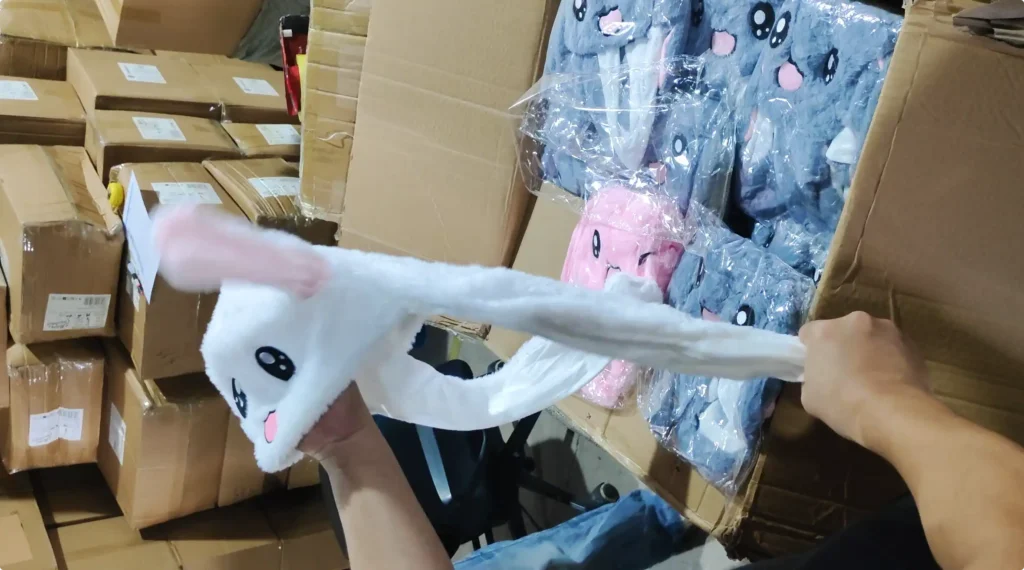
To help the customer clearly see the inspection result, our warehouse team also recorded the supplier’s demonstration video and sent it to the customer service group.
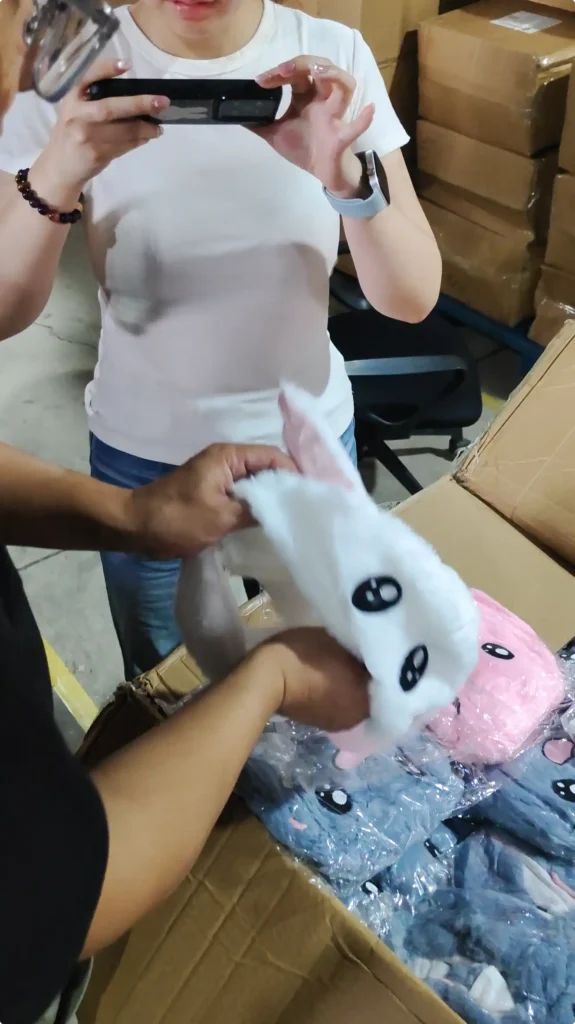
We also took internal-detail photos of the product for inspection records.
The panda style was also demonstrated.
Use weighing instead of manual counting
This batch had 1,100 hats in total. If we counted them one by one, it would take a lot of time.
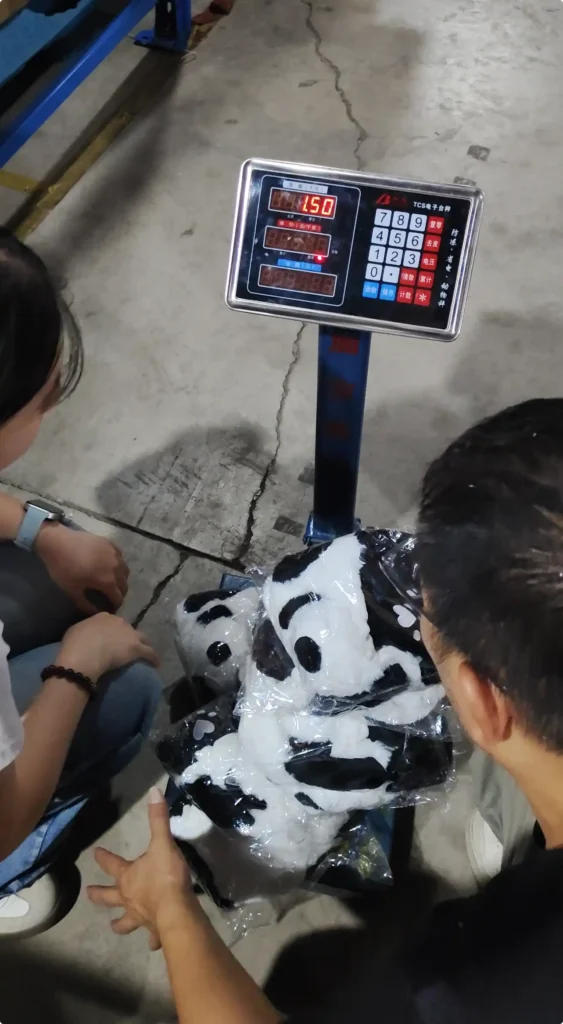
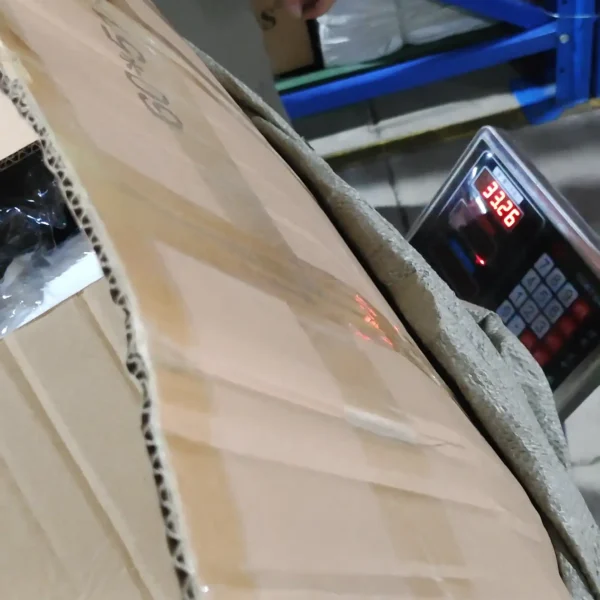
Because the weight of each hat was relatively consistent, the warehouse team used weighing instead of manual counting to verify the quantity.
In the actual check:
10 hats weighed about 1.5 kg
The average weight was about 150 g per hat
One full carton weighed about 33.26 kg
This is not just “weighing the carton and stopping there.”
It is a practical way to use consistent single-item weight as part of the quantity check, so we can verify the count more efficiently.
One small defect was found during spot check
During the spot check, we found one cow hat with a very small defect: a suspected stitching mark or clamp scratch, less than 2 mm long.
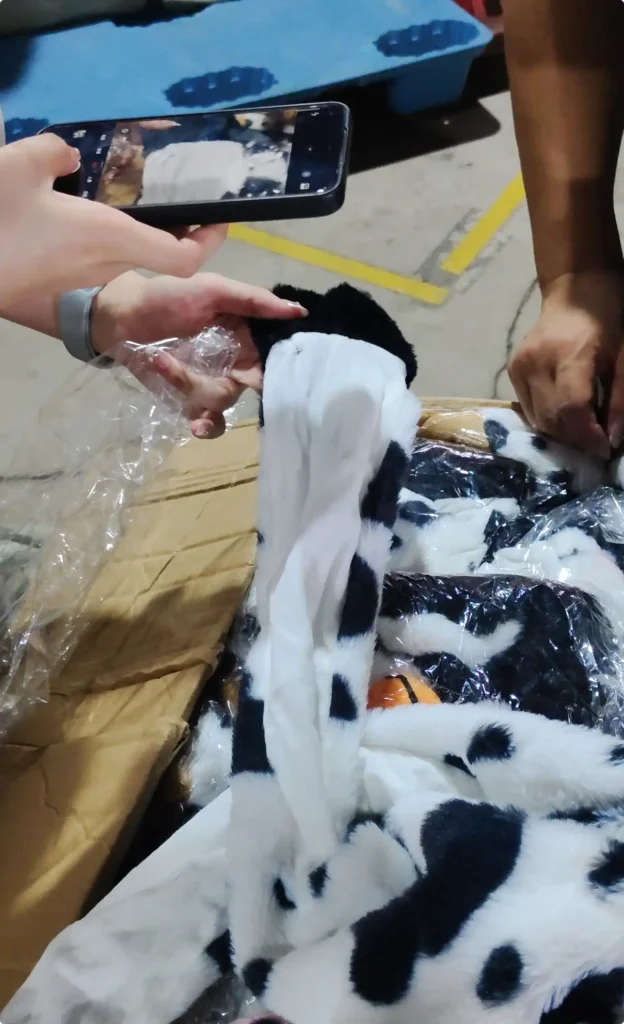
Our inspector recorded the issue and immediately reported it to the supplier.
The supplier said they had not noticed the problem before and agreed to deduct the cost of one hat from the payment. That defective hat was still sent to the customer, and we explained the issue clearly to the customer as well.
Aside from that small defect, the rest of the sampled items were normal.
Multi-Color Hats — Check Style, Color, Quantity, and Packaging
The same hat supplier also delivered another batch of hat products, with 8 cartons and 1,550 hats:
British-style hats: 1 style, 7 colors, 2 cartons × 175 = 350 hats
Fashion hat style 1: 4 colors, 2 cartons × 200 = 400 hats
Fashion hat style 2: 4 colors, 2 cartons × 200 = 400 hats
Fashion hat style 3: 2 colors, 2 cartons × 200 = 400 hats
For this batch, the inspection focus was different.
The main checks were:
Style
Color
Quantity
Packaging
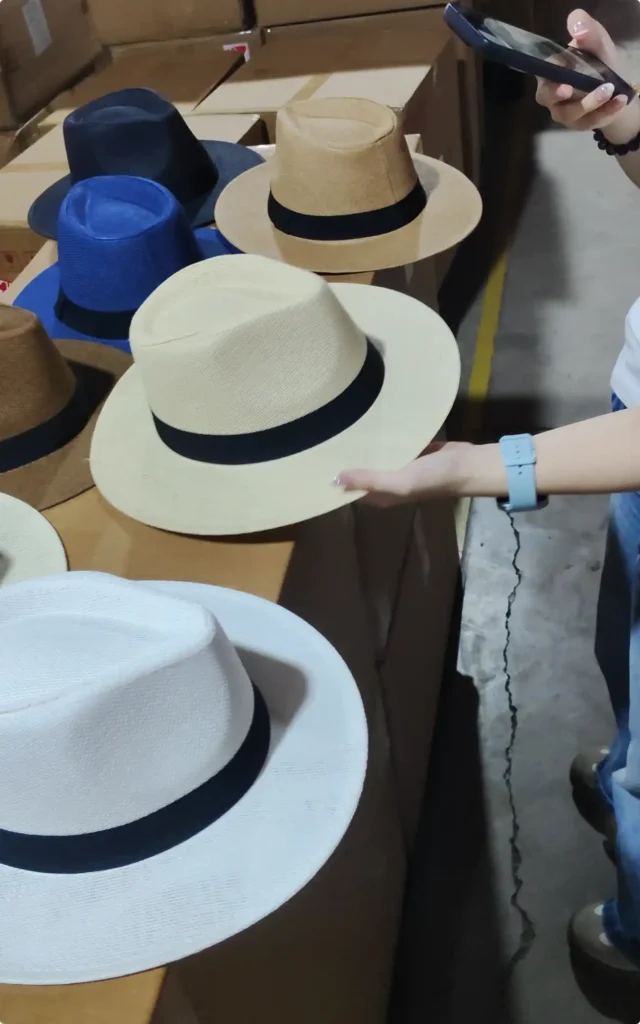
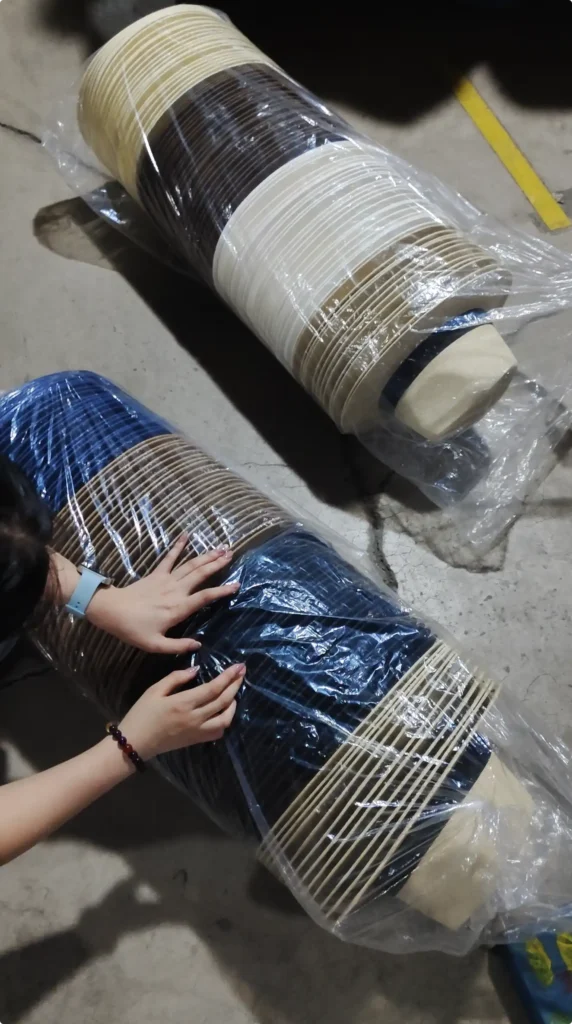
For products with multiple colors and styles, one of the biggest risks is mixing different colors or styles into the wrong carton.
That is why our warehouse team checks each style and color one by one instead of relying only on visual impression.
Spray Bottles — Focus on Color and Capacity
The second supplier delivered spray bottles.
This batch had 50 cartons and 6,400 pieces.
The products included:
7 colors:
black
white
purple
pink
transparent white
transparent black
transparent
And 3 capacities:
200 ml
300 ml
500 ml
So for this batch, the inspection focused mainly on:
Color
Capacity
Quantity
Appearance
Packaging
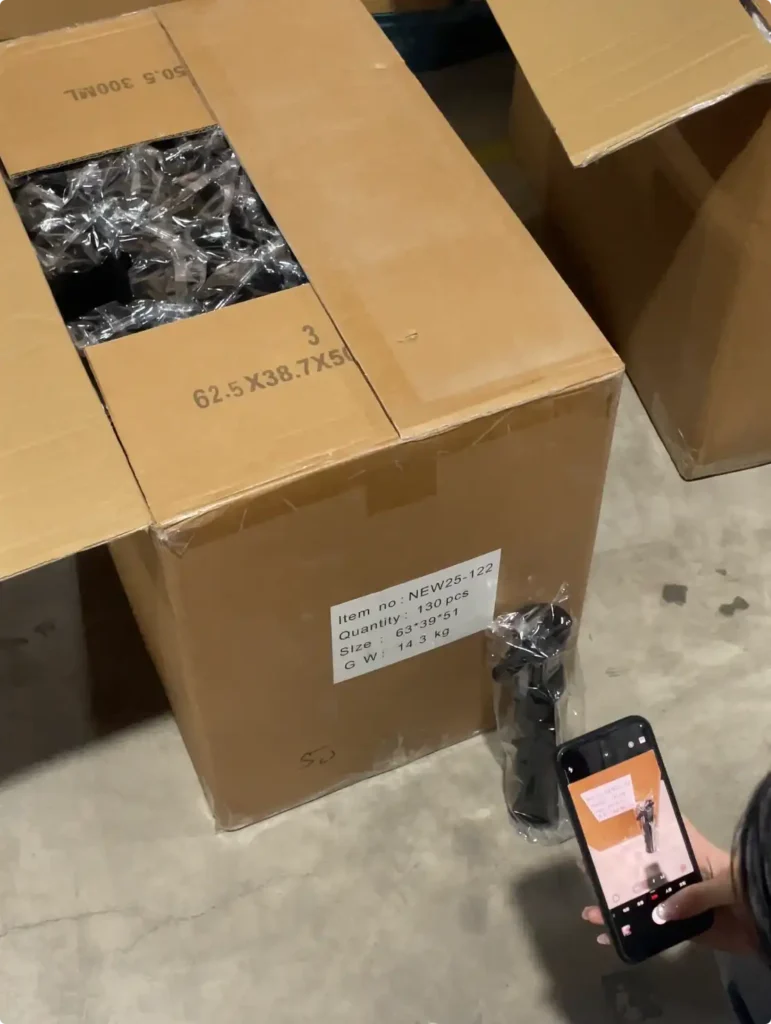
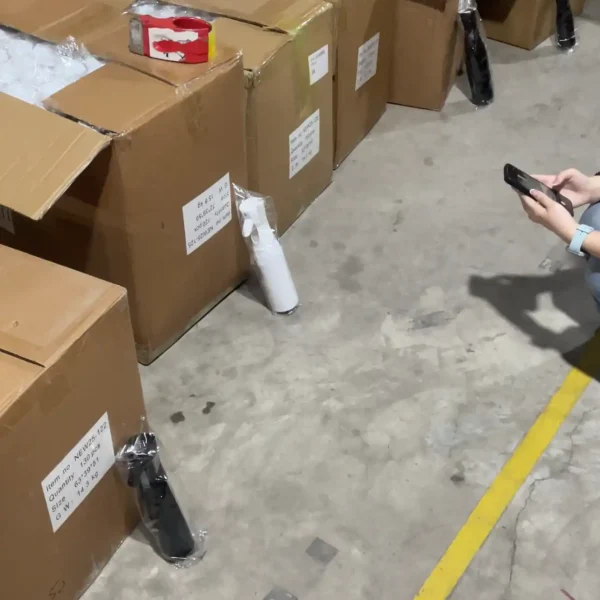
Compared with the moving-ear plush hats, the photo record for this batch was not as complete. So here we only describe the steps that were actually recorded, and we do not add theoretical inspection steps that were not part of the real case.
A real warehouse case should describe what actually happened, not add a theoretical inspection process just to make it sound complete.
What Happens When a Problem Is Found?
Warehouse inspection is not simply:
Find a problem → the warehouse decides what to do
Usually, the issue goes through several steps: record, photo, report, and confirmation.
After the warehouse team finds an issue, we record the problem, take photos, and then report it to the supplier and customer.
Depending on the situation, the follow-up may include:
Supplier confirmation
Quantity or payment adjustment
Customer confirmation
Shipment continuation after the customer agrees on the solution
The warehouse team’s job is to document the facts and coordinate the process, not to make commercial decisions on behalf of the customer.
What Happens After Inspection?
Once the inspection is finished and no unresolved issue remains, the goods can be officially received and stored in the customer’s designated warehouse area.
After that, the cargo may move to the next step, such as:
Consolidation with cargo from other suppliers
Repacking or relabeling
Kitting
International shipping
So receiving and inspection are closely connected, but they are not the same thing.
Receiving mainly confirms what arrived and how much arrived.
Inspection focuses on whether the goods match the expected style, color, quantity, function, or specification.
Different Products, Different Inspection Methods
This case involved only two suppliers and three product types, but it already showed three different inspection priorities.
The moving-ear plush hats required a function test, and because the weight of each piece was relatively stable, we used weighing instead of manual counting.
The multi-color hats required checks on style, color, quantity, and packaging.
The spray bottles required checks on color, capacity, quantity, appearance, and packaging.
So there is no single inspection checklist that works for every product.
Functional products need functional checks.
Multi-specification products need specification matching.
Products with relatively stable weight can use weighing to improve quantity verification efficiency.
That is the most important point in this warehouse inspection case:
The inspection method should follow the product and the customer’s requirements, instead of forcing every shipment through the same routine.
If you are sourcing from multiple suppliers in China and need a warehouse team to receive, inspect, consolidate, pack, and prepare your goods for shipping, tell us what you are shipping and where it needs to go. We can help you plan the warehouse, consolidation, and shipping process around your actual cargo.
Frequently Asked Questions
1.What happens when products arrive at a China warehouse?
When products arrive at our China warehouse, our team first confirms the delivery information and then checks the goods according to the customer’s requirements and the characteristics of each product.
2.How does a China warehouse inspect products from multiple suppliers?
Products from multiple suppliers can be inspected separately according to their own requirements. Functional products may need function tests, while products with multiple colors or specifications may require style, color, quantity, and specification checks.
3.Can a warehouse use weighing instead of counting products individually?
Yes. When individual products have relatively consistent weight, weighing can be used as a practical method to verify quantity instead of manually counting every piece.
4.What happens if a defect is found during warehouse inspection?
The warehouse team records the issue, takes photos when necessary, and reports it to the supplier and customer. The final handling can then be confirmed based on the specific situation.
5.What is the difference between receiving and inspection?
Receiving mainly confirms what arrived and how much arrived. Inspection focuses on whether the goods match the expected style, color, quantity, function, or specifications.
Recent Posts
Archives
¿Listo para simplificar su logística en China?
Ya sea que esté preparando su primer envío o buscando un socio logístico más confiable, estamos aquí para ayudarle.
Cuéntenos sus necesidades de abastecimiento o envío y nuestro equipo le responderá con recomendaciones prácticas.
Dragon 3PL
Ofrecemos almacenamiento, consolidación de mercancías, envíos FCL, entrega puerta a puerta y numerosos servicios de valor añadido para empresas que envían productos desde China hacia mercados internacionales.