What Happens Before a 40HQ Container Leaves China? (Consolidate & Load)
- August 25, 2026
- 8 min read
- Equipo Dragon 3PL
A Real Multi-Supplier Warehouse Consolidation and Container Loading Case
If you source products from China and work with multiple suppliers, the most complicated part is often not production, but the final shipping process.
Different suppliers have different production schedules. Some products may be completed earlier, while others may need more time. Product packaging, delivery timing, and order quantities can also vary between suppliers.
If each factory arranges shipments separately, it can increase communication costs and make it more difficult to organize a smooth export shipment.
That is why many overseas buyers choose to send products to a China warehouse first, consolidate cargo from different suppliers, and arrange one shipment after all goods are ready.
Recently, we completed such a shipment.
The customer purchased general cargo from multiple suppliers in China. All products were delivered to the Dragon3PL warehouse, consolidated, loaded into one 40HQ container, and shipped to Miami, USA.
The container loading process took around 3 hours.
However, the success of those 3 hours depended on the preparation work completed days or even weeks before loading started.
From Multiple Suppliers to One Warehouse
For overseas buyers, sourcing from multiple Chinese suppliers has become very common.
Some buyers choose different factories because each supplier specializes in different products. Others work with multiple suppliers to achieve better pricing or product variety.
However, managing multiple suppliers also creates a challenge:
How can products from different factories be combined into one efficient export shipment?
This is where a China warehouse plays an important role.
For this shipment, different suppliers delivered their products to the Dragon3PL warehouse according to their own production schedules.
Our warehouse uses pallet-based management.
Products from each supplier are organized on separate pallets, making it easier for warehouse handling, identification, and shipment preparation.
Dragon3PL operates a warehouse of approximately 900㎡, divided into 9 operational areas.
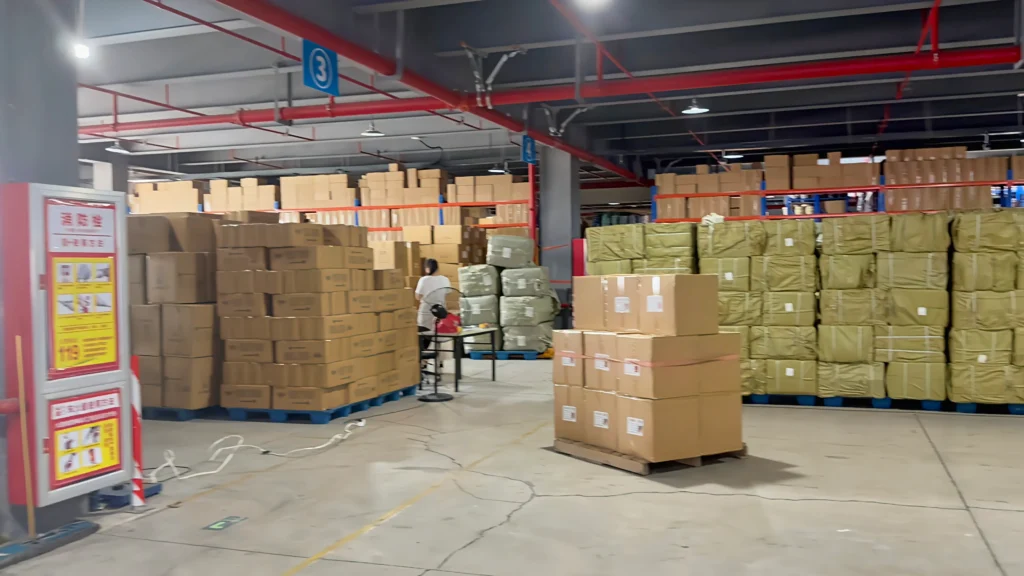
Normally, cargo from the same customer is organized within the same warehouse area for easier management.
For this shipment, since the products were planned to be loaded into the same 40HQ container, all related cargo was arranged in the designated loading area.
The purpose was not simply to save warehouse space.
The main goal was to make the shipment process more efficient.
When all cargo is organized in one area, the warehouse supervisor can clearly understand the shipment status and more easily prepare the inspection, organization, and container loading plan.
When the customer confirmed the shipment date, all cargo was already prepared and ready for loading, without needing extra time to locate products in different warehouse areas.
For a multi-supplier order, this type of organization is an important step in achieving efficient container loading.
Waiting for All Cargo to Arrive Is Also Part of the Process
Many people think that after products arrive at the warehouse, the team simply waits until all suppliers finish delivery and then starts loading.
In reality, this period is also an important part of warehouse operations.
As different suppliers deliver their products, the warehouse team continuously checks cargo status, quantities, and packaging conditions to make sure the shipment can proceed according to the customer’s plan.
If some products require additional preparation, such as repacking or reorganizing smaller items, these tasks can be completed before container loading.
In this shipment, some smaller cartons were reorganized into larger cartons with more suitable sizes.
The purpose was not to change the products, but to make the packaging more suitable for export handling, improve organization, and reduce unnecessary empty space inside the container.
After the final supplier completed delivery, the order was ready for container loading.
Once the customer confirmed shipment, the loading preparation officially began.
Before Loading Starts, Planning Comes First
When people watch a container loading video, it may look like workers simply move cartons into the container one by one.
However, the most important part of efficient container loading happens before the first carton is moved.
After receiving the loading confirmation, the warehouse supervisor does not immediately start loading.
Instead, the cargo is reviewed first, and a loading plan is prepared based on the actual condition of the shipment.
For this 40HQ container, although all products had already been organized in the same loading area, the cargo came from different suppliers with different product sizes, packaging methods, and weights.
The warehouse supervisor planned the loading sequence based on these details.
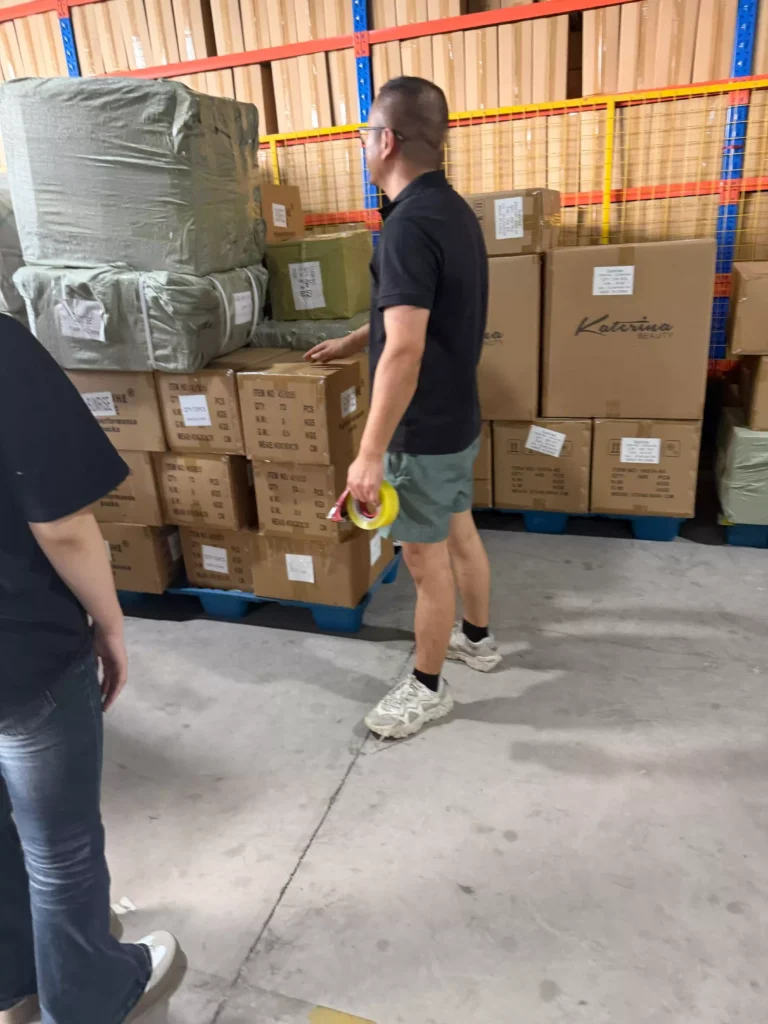
Which cargo should be placed as the bottom layer?
Which cargo can be stacked on upper layers?
Which products should be loaded near the container doors as the final loading items?
Which cartons need to follow specific handling directions?
These details were considered before loading started.
For an experienced warehouse supervisor, container loading planning does not begin when the container arrives at the warehouse.
Once all cargo is ready, the overall loading sequence has already been considered.
To make the plan easier for the loading team to follow, the warehouse supervisor used a marker to write labels such as “bottom layer” and “upper layer”, then attached them to the corresponding pallets from different suppliers.
These simple markings help reduce communication time during loading.
The workers can clearly understand where each group of cargo should be placed inside the container.
As a result, the loading process becomes an execution of a prepared plan, rather than making decisions while moving cargo.
Container Loading Process Begins
When the 40HQ container arrived at our warehouse, the loading operation officially started.
After the container was positioned, the doors were opened and the team first checked the inside condition of the container to make sure it was clean, dry, and suitable for loading.
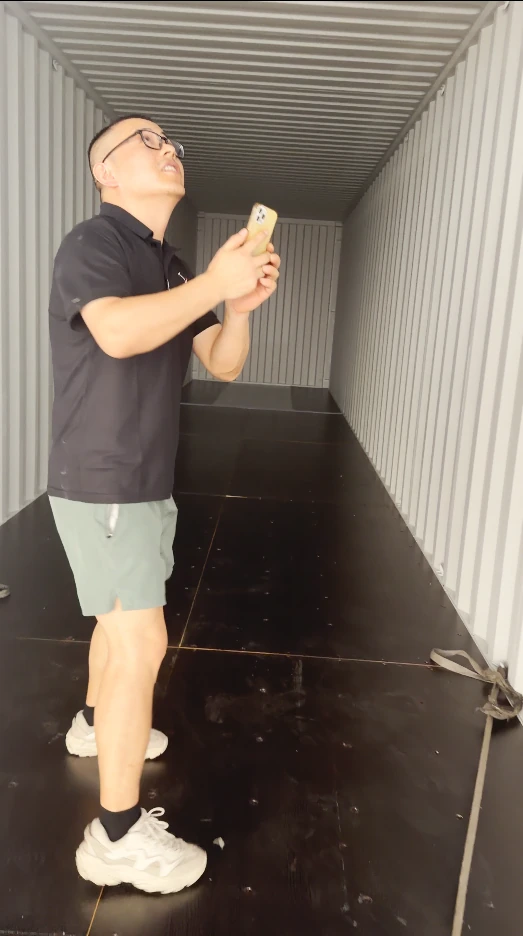
Once everything was confirmed, pallets prepared in the loading area were moved toward the container, and the loading team began arranging the cargo according to the previous plan.
This is also where many people have a misunderstanding about pallet management.
When customers see pallets being moved toward a container, they may assume that the cargo will be shipped exactly as it is on the pallets.
However, that is not always the case.
In this shipment, pallets were mainly used for warehouse handling and organization.
After the pallets reached the container, cartons were manually arranged inside the container according to the loading plan.
For multi-supplier shipments with different carton sizes and product characteristics, this method allows the team to use the container space more efficiently while maintaining proper cargo handling.
Every Carton Has a Planned Position
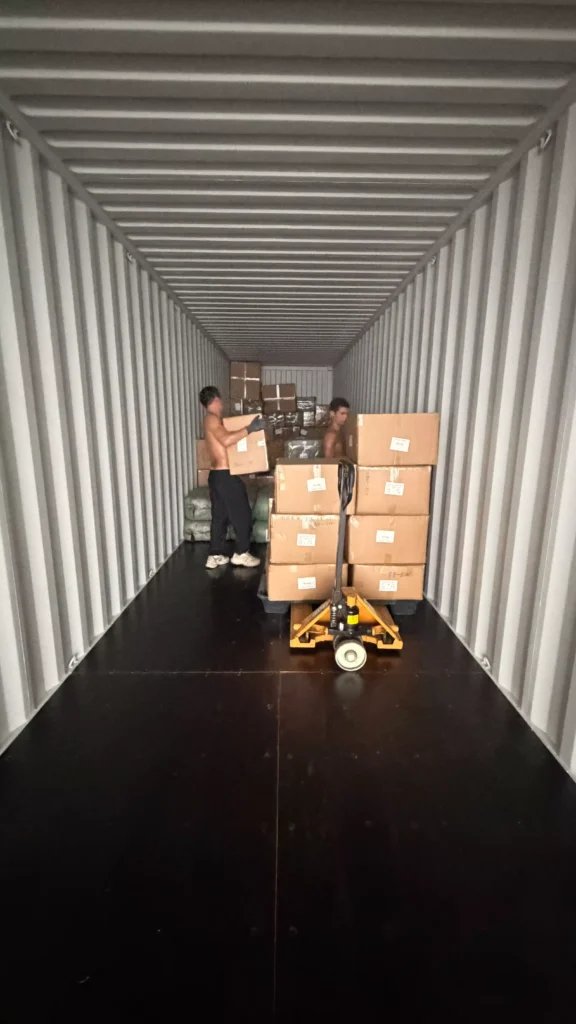
Once loading started, three warehouse workers worked together to complete the operation.
One worker focused on moving cargo from pallets toward the container, while the other workers arranged cartons inside the container.
The warehouse supervisor stayed on site throughout the process, checking the loading progress and making sure the actual placement followed the original plan.
For example, some cartons have directional arrows printed on the packaging.
These arrows are not just decoration.
They indicate how the cartons should be handled and placed during transportation.
Even when trying to maximize container space, cartons with handling instructions should not simply be turned in another direction.
The team follows the packaging requirements to help protect the products during transportation.
Cargo weight and packaging structure are also important considerations.
Heavier products are generally placed in lower positions to provide better support, while lighter products or cartons with specific handling requirements are arranged in suitable upper positions.
Although the loading process may look like workers are constantly adjusting positions, most decisions have already been made before loading begins.
The team is mainly following the prepared loading plan rather than deciding where each carton goes at the last minute.
Why Does a Half-Loaded Container Already Look Organized?
When the container was about half loaded, the cargo inside had already formed a relatively organized arrangement.
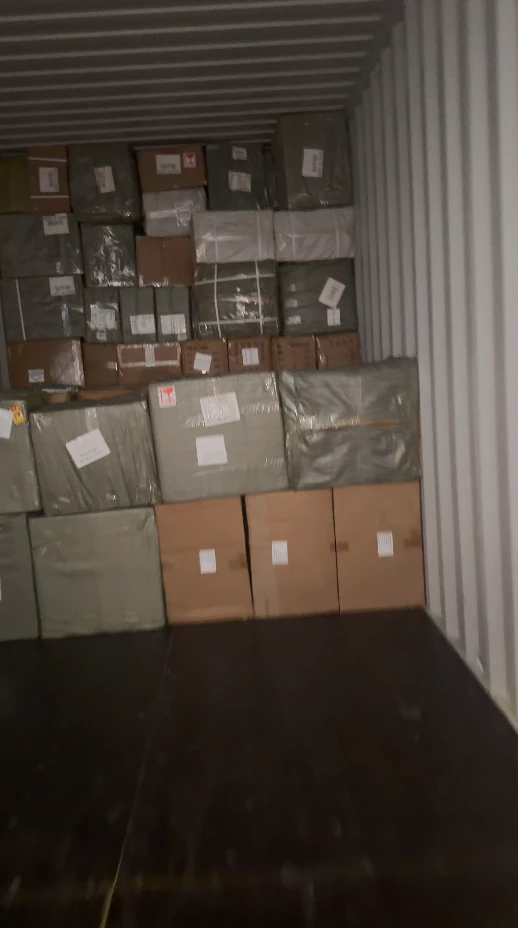
Many people may think container loading is mainly about physical labor.
However, the experience behind the process is actually reflected in space planning.
The internal space of a 40HQ container is fixed.
Without proper planning, workers may need to repeatedly move cargo, adjust previous placements, or remove cartons that were already loaded in order to create enough space for the remaining products.
This not only wastes time but also increases unnecessary handling.
In this shipment, because the loading sequence had already been planned in advance, there were almost no major adjustments during the process.
Each group of cargo was loaded according to the planned sequence, allowing the operation to continue smoothly.
The Final Loading Items Are Also Planned in Advance
As the loading process approaches completion, the remaining space inside the container becomes more limited.
Some people may think that the last few cartons can simply be placed wherever space is available.
In reality, the final loading stage is also part of the original loading plan.
For this shipment, the customer requested that certain products be placed near the container doors as the final loading items.
Therefore, these products were considered from the beginning of the loading plan, rather than being decided at the last moment.
After the main cargo was arranged, these customer-designated products were placed in their planned position near the doors.
Because this arrangement had been considered beforehand, the team did not need to move previously loaded cargo or make major adjustments to fit the final items.
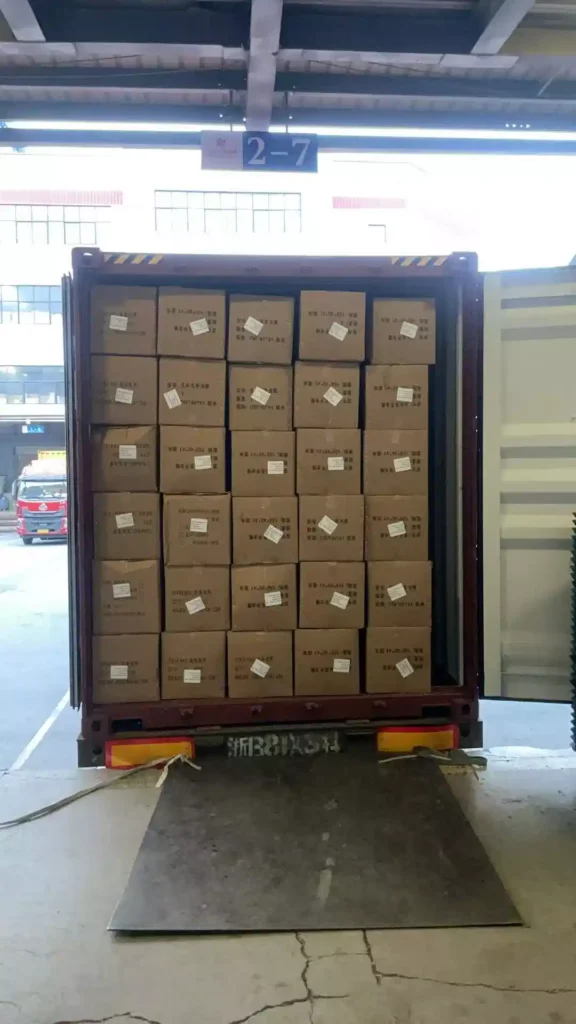
After the final loading items were placed, the 40HQ container was fully loaded and ready for shipment to Miami, USA.
What Makes a Container Loading Process Successful?
Looking back at this 40HQ shipment, the actual loading operation took approximately 3 hours.
However, the reason those 3 hours went smoothly was not simply because of loading speed.
It was because of the preparation behind the operation.
From receiving cargo from multiple suppliers, to pallet-based warehouse management; from organizing all products in the designated area, to preparing the loading sequence; from marking pallet instructions, to supervising the final loading process — every step affected the final result.
For overseas buyers, the value of a China warehouse is not only providing storage space.
A professional warehouse also helps connect suppliers, purchase orders, and international transportation.
When preparation work is completed properly, container loading becomes the final step of an organized process.
Conclusion
For a 40HQ container, closing the doors means the beginning of its journey to Miami, USA.
But for the warehouse team, this shipment started much earlier — from the moment the first supplier delivered cargo to the warehouse.
From receiving products, pallet-based management, order consolidation, loading planning, and final container loading, every step plays a role in creating a smooth export process.
If your products come from multiple suppliers in China and you need a partner to consolidate, organize, and prepare your cargo before export, proper warehouse planning can make the entire shipping process more efficient and easier to manage.
Behind every container leaving China successfully is not only a loading operation, but also a complete warehouse coordination process.
The longer the inspection process takes, the higher the possibility of additional logistics costs.
Frequently Asked Questions
1. Can you combine products from multiple suppliers into one container?
Yes.
This is one of the common warehouse consolidation services we provide.
Products from different suppliers can be delivered to our warehouse, organized separately, and consolidated into one container shipment after all cargo is ready.
2. How do you manage cargo from different suppliers?
We use pallet-based warehouse management to organize cargo from different suppliers.
Each supplier’s products are managed separately, which helps with cargo identification, handling efficiency, and shipment preparation.
3. Do you load pallets directly into containers?
Not always.
Pallets are mainly used for warehouse handling and cargo organization.
During container loading, cartons may be manually arranged based on cargo characteristics, packaging requirements, and available container space to improve loading efficiency.
4. How do you maximize container loading space?
Before loading begins, our warehouse supervisor plans the loading sequence based on cargo size, weight, packaging, and customer requirements.
This helps reduce unnecessary adjustments during loading and improves container space utilization.
5. How long does it take to load a 40HQ container?
The loading time depends on cargo quantity, packaging type, and loading requirements.
For this shipment, the actual container loading process took approximately 3 hours with a three-person loading team.
6. Can you handle shipments to the USA?
Yes.
We support export preparation services from China, including warehouse consolidation, cargo organization, container loading, and shipment coordination.
Recent Posts
Archives
¿Listo para simplificar su logística en China?
Ya sea que esté preparando su primer envío o buscando un socio logístico más confiable, estamos aquí para ayudarle.
Cuéntenos sus necesidades de abastecimiento o envío y nuestro equipo le responderá con recomendaciones prácticas.
Dragon 3PL
Ofrecemos almacenamiento, consolidación de mercancías, envíos FCL, entrega puerta a puerta y numerosos servicios de valor añadido para empresas que envían productos desde China hacia mercados internacionales.